
CEOxHR debate: Is there such a thing as the ultimate leadership style?
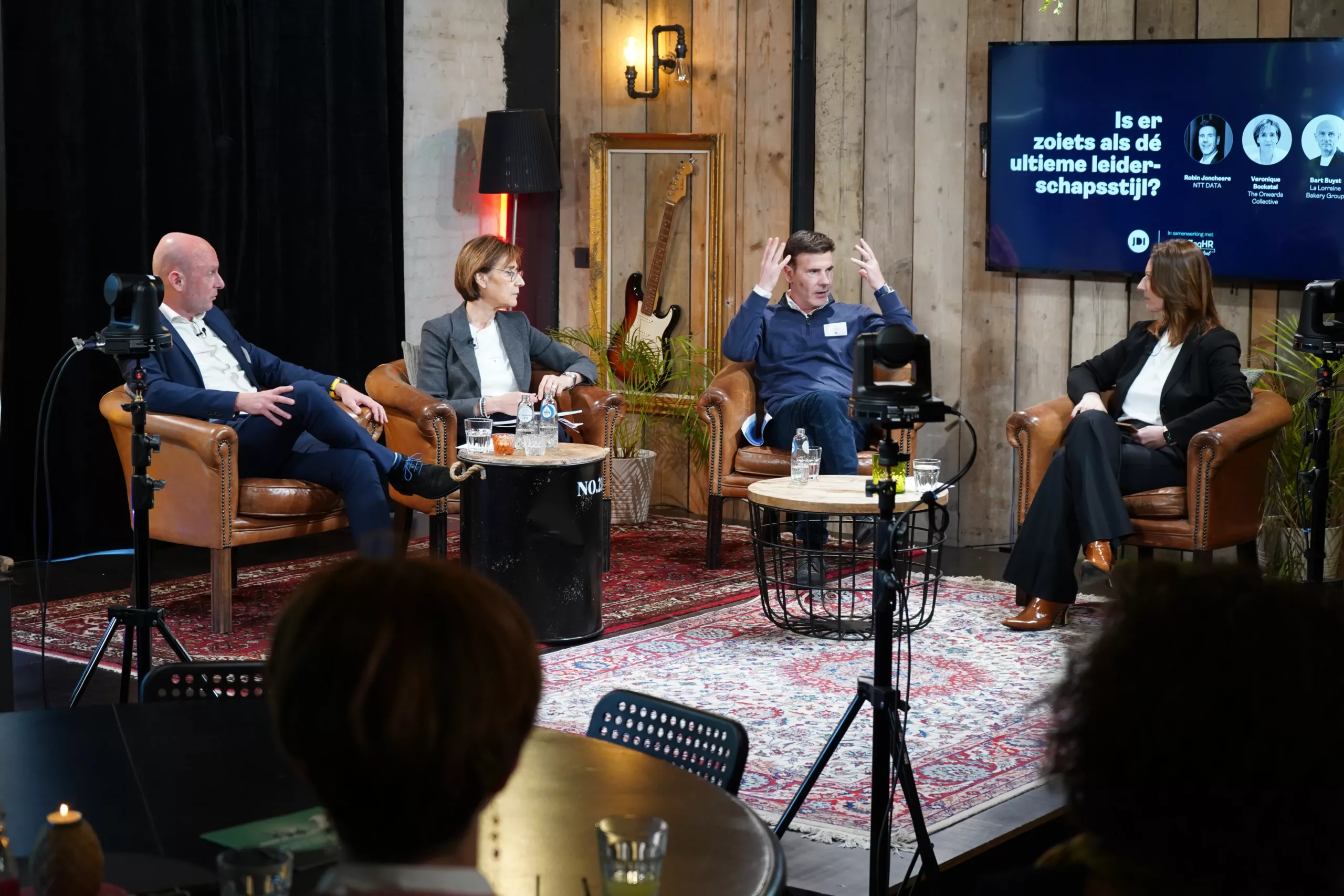
At JDI’s annual CEOxHR event, we put a hot-button topic on the table: is there such a thing as the ultimate leadership style? Opinions flew back and forth. Moderated by Lesley Arens (#ZigZagHR), three heavyweights crossed swords: Robin Joncheere (NTT DATA), Véronique Bockstal (The Onwards Collective) and Bart Buyst (La Lorraine Bakery Group). It turned into a search for nuance, with a few jokes about chips, fire extinguishers and green banknotes.
Context is essential
Véronique Bockstal took the big question apart straight away: leadership is contextual. In other words, stop looking for that one golden rulebook. Sometimes you need to be the captain who consults, sometimes the commander who shouts “Out. Now.”
She also makes it clear that two factors always play a part: the situation and your personality. You can try to force yourself into a different style, but you will (hopefully) always remain a bit yourself.
Clarity is underrated
Another theme is clarity. Véronique points to the tendency of many (often female) leaders to get stuck in woolly vagueness. Afraid of coming across as too blunt, or worse, of scaring people off.
But in her view, that is exactly what employees need.
Being clear does not mean banging the table. It simply means saying what you expect. Especially with hybrid work and self-managing teams, that matters.
Leadership that makes itself redundant
Bart Buyst brought a different angle: real leadership is about letting go. It’s only truly impressive when the machine keeps running without you having to touch every button.
Instead of controlling, a leader should extend trust. Not a micromanager, but a systems thinker who creates room for autonomy and ownership. That’s not airy-fairy HR jargon, it’s just smart organising!
Authenticity vs caricature: knowing which version of yourself to be
There’s no getting around it: the A-word came up too. Authenticity. Bart warns that it can be a trap as well. Anyone who is always ‘themselves’ in every situation risks becoming a caricature rather than a leader.
Lesley draws a sharp metaphor from Katleen de Stobbeleir: leadership is like a chest of drawers full of versions of yourself. The key is knowing which drawer to open for whom, when and why.
So are leaders born or made?
And then the classic question in every leadership debate: are leaders born, or made?
Talent is needed, yes. But context and feedback matter too. Robin calls people ‘chips’: no two are the same, yet companies keep trying to squeeze them into standard shapes. And that simply doesn’t work… however much we Belgians love our chips!
Mistakes are allowed... unless you’re a leader?
Next topic: are we too hard on our leaders? We all shout it from the rooftops: “Fail fast, fail often!” But woe betide a leader who stumbles. Suddenly we are harsh, sharp and impatient.
Véronique and Bart agree: if you’re at the top, you have to expect the heat. Yet companies that won’t tolerate mistakes create defensive leaders. Goodbye innovation, goodbye growth, just office politics and burnout.
Vision, communication and awareness
Finally, the group turned to the role of the leader. Leadership starts with the leader, but it is not about them. The leader sets the playing field, but above all they need to be aware of their impact on others.
Communication, transparency and aligned execution are the key principles. And according to Robin, middle management doesn’t exist, by the way. Or at least, it shouldn’t! An organisation is one whole, not a set of “us” and “them”.
Conclusion: no ultimate style, but ultimate skills
So, back to the question: is there such a thing as the ultimate leadership style?
No. But according to our panel, the ultimate leaders do share common traits: they switch gears, communicate clearly, extend trust, dare to fail, stay true to themselves (without overdoing it) and, above all, they understand that leadership is not a one-man show.
They create systems, context and space where others can thrive, with or without money 😉.
More insights

8 signs your team is not speaking up about problems, or is doing it too late, plus what you can do about each one.

At the CEOxHR event we explored whether agile leadership leads to impact or to confusion. And what part context, clarity and self-awareness play.

During the CEOxHR event, experts debated what participatory leadership does to decision-making, trust and conflict. When does it lead to buy-in, and when to deadlock?
Want to take this on in your business?
You don’t have to have your question sorted yet. Working that out is exactly where we start.