
Personal branding for business owners and managing directors
Your company has a good-looking website and a LinkedIn company page with a few hundred followers.
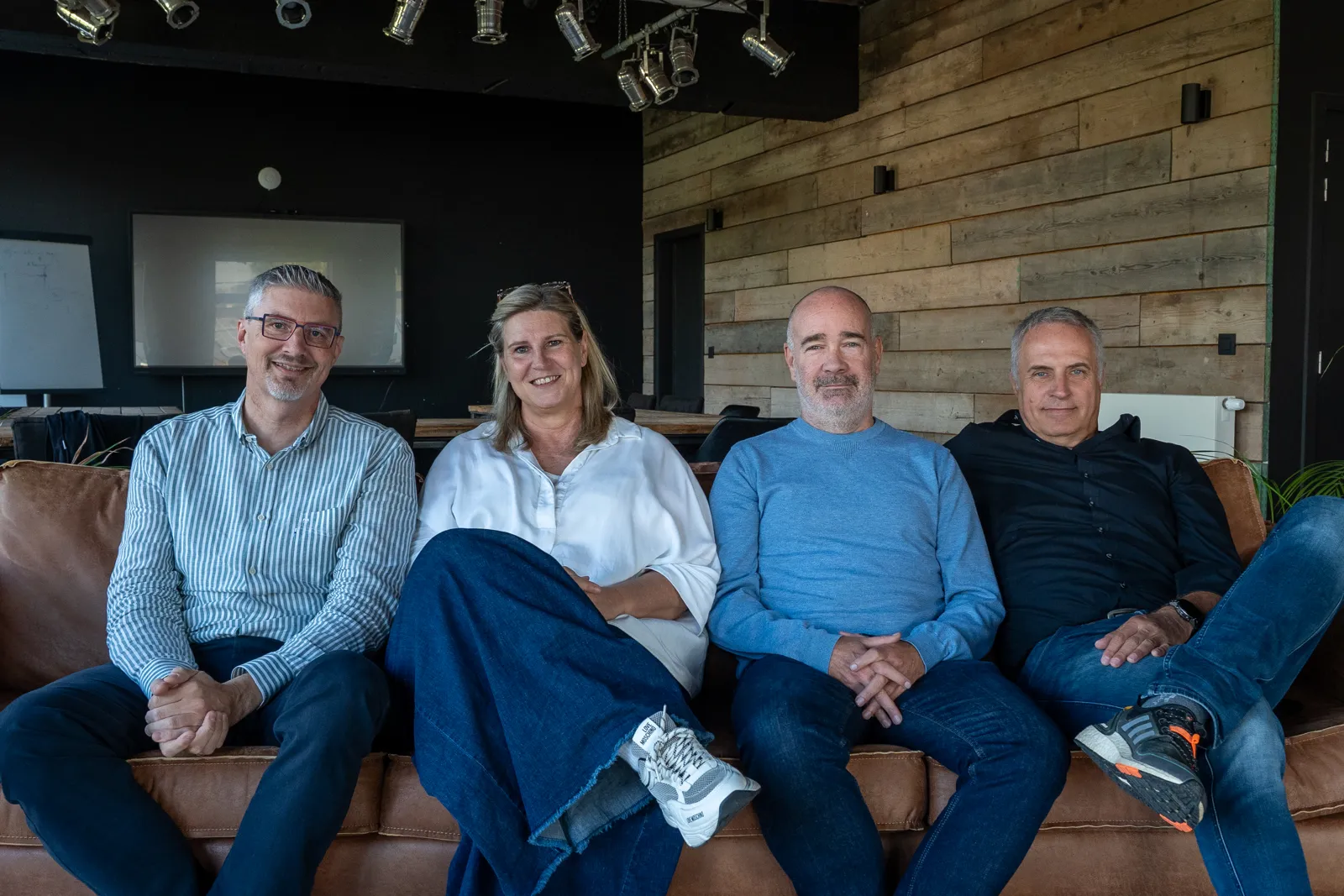
Yet most new clients come in through you: someone who knows you, once heard you speak or was given your name. You’re the face of your company, whether you like it or not.
Personal branding makes a conscious effort of that. In this blog you’ll read what personal branding is, why it pays off for business owners and managing directors, how to approach it in five steps and how to make your personal brand work together with your company’s.
In short: Personal branding is consciously building how others see you as a professional: what they know you for and what they call you about. For a business owner it pays off because people do business with people, and a visible managing director builds trust before the first meeting. Choose a clear theme, get your LinkedIn profile in order, regularly share what you know and align your story with your company’s brand.
What is personal branding?
Personal branding is consciously building how others see you as a professional. What do people know you for, what do they call you about, and what do they say about you when you’re not in the room? For a business owner or managing director, it’s about your expertise, your views and the way you share them. It isn’t about blowing your own trumpet or posting a selfie every day. It’s about making sure the right people know what you’re good at.
Everyone has a personal brand, whether you work on it or not. Anyone who googles your name or looks at your LinkedIn profile forms an impression. The question is whether that impression matches who you are and what you want to achieve. Personal branding follows the same logic as your company’s brand, but with you as the starting point. How a company brand works, you can read in Branding for SMEs.
Why personal branding pays off for business owners
In B2B, people do business with people. A buyer hesitating between two suppliers often chooses the one whose managing director or specialist they already know a little. A visible business owner builds trust before there’s even a first meeting. You get invited to speak sooner, referred sooner and contacted by partners sooner. Your company page rarely does that job as well, because people respond more to a face than to a logo.
It plays a part in recruitment too. Candidates look at who’s at the helm before they apply. A managing director who talks openly about why they do what they do and how the team works makes the company more attractive as an employer. That’s where personal branding meets employer branding, consciously showing your company as a place where people like to work.
Personal branding in five steps
1. Decide what you want to be known for
Choose one or two subjects where you genuinely have something to say. Think of “growing as a family business in construction” or “automation in small manufacturing companies”. A broad theme like “entrepreneurship” sticks far less. The sharper your subject, the faster people link you to it. The same questions as for a company help here: for whom, which problem and what’s your angle? Also read Defining your positioning in five questions.
A simple test: finish the sentence ‘I help (who) with (which problem) through (your approach), so that (result)’. If you can’t do it in one breath, your theme is still too broad. Also ask yourself what your visibility needs to deliver: more enquiries, stronger candidates, invitations to speak? That goal determines which topics you choose and which channels you need.
2. Get your basics in order
For many people, your LinkedIn profile is the first introduction. Make sure you have a recent, professional portrait photo, a headline that says what you do and for whom, and a summary in plain language. A holiday photo or a headline with just your job title is a missed opportunity. Look at your company’s about page too: is your story there?
3. Share what you know and what you think
Share lessons from your daily work, an opinion about your sector, a question customers often ask or a mistake you made yourself. Real stories work better than general tips. A post about why you turned down a big contract says more about you than ten posts about customer focus.
4. Be visible regularly
One or two posts a week, plus comments on other people’s posts, is achievable and enough for most business owners. Regularity counts for more than volume. Block fixed moments in your diary, so it doesn’t become a task that keeps getting pushed to next week.
5. Use photos and video
People remember faces and voices better than text. A short video in which you answer a customer’s question, or a photo of you on site or in the workshop, makes you visible as a person. You don’t need to be a film star: a calm, genuine explanation works better than a polished speech.
Channels for personal branding
| Channel | What for | Tip |
|---|---|---|
| Visibility with customers, partners and candidates | Post from your own profile, not only via the company page | |
| Events and talks | Showing expertise and meeting people in real life | Tell one concrete story instead of giving a general presentation |
| Trade magazines and local media | Credibility in your sector | Offer a viewpoint or a figure from your own practice |
| Video | A face and a voice to go with your name | Short answers to customer questions work well |
| Newsletter | A steady bond with people who already know you | Write personally, as if you’re emailing one customer |
| Podcast as a guest | Telling your story at length | Choose podcasts your target audience listens to |
What if you don’t like being in the spotlight?
Many managing directors feel uncomfortable at the idea of posting about themselves. That’s understandable, and it’s not a problem either. Personal branding doesn’t have to be about you as a person, but about what you know and what you stand for. Talk about your customers, your team, your trade. Let colleagues appear in the picture too. If you’d rather speak than write, you can record ideas on your phone and have a copywriter work them out. It stays your story and your voice, you just don’t have to sit at the keyboard yourself.
Mistakes we often see
- Only posting about successes. A series of new-client announcements reads like an advert. Also share what was difficult and what you learned.
- Having an opinion about everything. If you post about every subject, you become known for nothing. Stick to your theme.
- Starting and stopping after a month. A profile with three posts from two years ago does more harm than good.
- A different tone from your company. If you post very informally and your company is very formal, nobody understands who you are any more. Align the two.
- Outsourcing everything without input. Posts someone else writes without your stories sound generic. Your input is still needed.
Personal branding and your company’s brand
Your personal brand and your company brand reinforce each other, provided they tell the same story. You bring the human face, the opinion and the anecdotes. The company brings the offer, the cases and the team. Use the same core message and, where possible, the same visual identity in visuals and banners. What a visual identity includes, you can read in Having a visual identity designed. Think ahead too: if you ever take a step back, the company has to stay recognisable without you. So build visibility for other faces in your team as well.
How JDI approaches it
At JDI, we help business owners and managing directors become visible without it costing them hours every week. Together we define your theme and your tone, starting from your company’s positioning. Then we plan your posts on LinkedIn and the other channels that suit your target audience, and write them based on your stories. In our own studio in Neerijse, we shoot your portrait photo and short videos in which you share your expertise. For Quantum Circle, the Belgian quantum community, we’ve handled social media from the start. We deliberately put the experts behind the community in the spotlight too, because thought leadership works better through a face than through a company page. Read more about our approach to branding.
Frequently asked questions
What is personal branding?
Personal branding is deliberately working on how others see you as a professional: what they know you for and what they call you about. For a managing director, it’s about your expertise and your views, and how you share them on LinkedIn, at events or in trade journals.
What does personal branding cover?
Everything people recognise you by as a professional. Your LinkedIn profile and your posts, but also your portrait photo, the way you speak at an event, your emails, what you write in a trade journal and what customers say about you. Your views and the topics you speak out on are part of it too. Think of it as your reputation in a village: it’s made at the market, in the pub and at the school gate, not in just one place.
What does personal branding cost?
If you do it yourself, it mainly costs time: count on an hour or two a week to post and respond. If you get support, the price depends on what you outsource, such as a portrait shoot, writing posts, videos or planning your channels. As a rough guide, many agencies charge €80 to €150 an hour excluding VAT or work with a monthly package. Start with a fixed base and expand when you notice it’s working, just as you’d try out a new training schedule for a few weeks first.
What is the difference between personal branding and employer branding?
Personal branding is about you as a professional: what people know you for and why they trust you. Employer branding is about your business as an employer: why someone would like to work for you. The two overlap, because candidates also look at who’s at the helm. A managing director who talks openly about how the team works is therefore doing both at the same time, like a chef who shows off their kitchen and attracts new cooks as a result.
How much of your private life should you share for personal branding?
As much as you want, and that can be very little. Coming across as genuine means being recognisable and consistent, not showing your holiday photos or your family life. An anecdote about a mistake you made or a lesson from your first years as an entrepreneur often says more than a photo of your breakfast. Draw a line beforehand and stick to it, like a host who shows you the living room but keeps the bedroom door closed.
How much time does personal branding take?
Less than you think, if you go about it smartly. With an hour a week for one or two posts and a few comments on LinkedIn, you already build visibility steadily. Regularity counts for more than volume, just like exercise: a half-hour run every week gets you further than one marathon a year. If you have little time, you can record ideas and have them written up.
Become visible as a business owner.
Does your brand no longer match who you are today, or do your customers not recognise you? Tell us briefly where you stand, and together we’ll look at what your brand needs: from positioning to visual identity. Email hallo@jdi.be or call 016 88 37 55. Discuss your brand
More insights

What does a DISC test measure, what doesn’t it, and what do you gain with your team? Five steps, a comparison with Insights and MBTI and a short exercise.

What is peer supervision, how does it differ from supervision and coaching, and how do you run a session? Six steps, an example and eight good questions.

A summary of Vlerick’s Six Batteries of Change: the six batteries, how to scan them with your management team and how it differs from Kotter and ADKAR.
Want to take this on in your business?
You don’t have to have your question sorted yet. Working that out is exactly where we start.