
Change management: change that brings people with you
The plan is ready: a new structure, a new system or a new strategy.
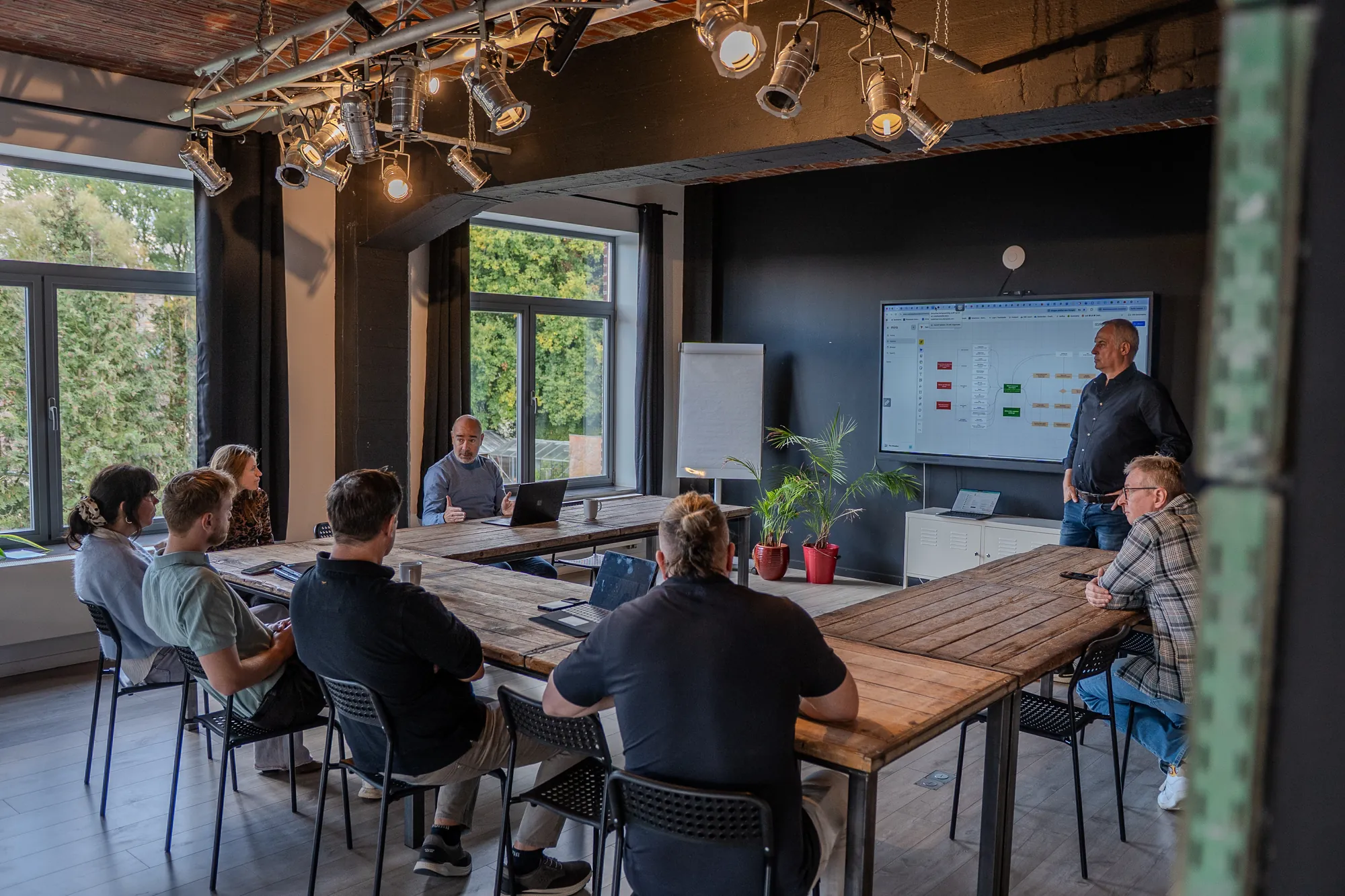
The presentation has been given, the timeline is set. Three months later, everyone is still working the old way. Sound familiar? Changes rarely stall because of the plan, and almost always because of the people who aren’t on board. In this blog you’ll read what change management is, which models exist, why changes fail and how to get started with it in an SME.
In short: Change management is guiding an organisation and its people through a change, so the new way of working actually happens. The best-known models are Lewin (unfreeze, change, refreeze), Kotter’s eight steps and Prosci’s ADKAR. Changes usually don’t fail because of the plan, but because the why is unclear, people don’t know what it means for them and managers are involved too late.
What is change management?
Change management is guiding an organisation and its people through a change. A new structure, a merger, a new ERP system, an office move, a new strategy. The plan itself is often the easy part. The hard part is making sure the people are on board: that they understand why, know what it means for them and actually adopt the new way of working.
Changes rarely stall on the technology. They stall on people who aren’t on board. A new system nobody uses, a new structure in which everyone carries on the old way, a strategy that only exists in the presentation. Change management is the discipline meant to prevent that.
Three well-known models
| Model | Core idea | Strong at |
|---|---|---|
| Lewin (three phases) | Unfreeze, change, refreeze | The big picture: letting go of old habits and anchoring new ones |
| Kotter (eight steps) | From urgency to anchoring in the culture | A step-by-step plan for the organisation and management |
| ADKAR (Prosci) | Awareness, Desire, Knowledge, Ability, Reinforcement | Seeing, person by person, where someone gets stuck |
Lewin: unfreeze, change, refreeze
In the 1940s, Kurt Lewin described change in three phases. First unfreeze: people see that the current situation no longer works. Then change: introduce the new way of working. And finally refreeze: anchor the new way until it becomes a habit. The model is simple, but the lesson still holds: if you skip the first and last phases, people quickly slip back into old habits.
Kotter: eight steps
John Kotter, a Harvard professor, described eight steps for successful change in 1996:
- 1. Create urgency: why does it have to change now?
- 2. Form a guiding coalition: a group of influential people who drive the change.
- 3. Develop a vision and strategy: where are we going?
- 4. Communicate the vision: often, simply and through different channels.
- 5. Remove obstacles: systems, structures or people blocking the change.
- 6. Generate quick wins: visible results in the short term.
- 7. Consolidate improvements: don’t declare victory too soon.
- 8. Anchor it in the culture: the new way becomes “how we do things here”.
ADKAR: change person by person
Prosci’s ADKAR model doesn’t look at the organisation, but at each employee. Someone only changes when they understand why (Awareness), want to take part (Desire), know how (Knowledge), are able to do it (Ability) and keep it up (Reinforcement). The big advantage: when a change stalls, you can see where. A team that doesn’t understand the why needs more explanation. A team that wants to but can’t needs training.
Want to go deeper into the models? Read The ADKAR model explained and Kotter’s 8 steps. You can read how to guide a reorganisation in practice and bring your teams with you in Guiding a reorganisation.
Why changes fail
- The why isn’t clear. If management can’t explain it in two sentences, neither can the team.
- People don’t know what it means for them. A general presentation doesn’t answer the question “what changes for me?”
- Managers are forgotten. They have to explain the change, but often hear about it at the same time as their team.
- Resistance is dismissed as obstruction. When it’s often a fair question.
- Attention stops after the launch. The real work only starts once the new way of working has been introduced.
Resistance deserves its own explanation, because it’s so often misunderstood. Read more in Resistance to change.
The role of managers
Managers make or break a change. They’re the ones employees come to with their questions, and their attitude determines how the team reacts. A team leader who has doubts themselves or sighs “it’s been decided, we have to go along with it” slows things down more than any bad plan. So involve managers early, give them time to understand and to have their own doubts, and give them the words to start the conversation with their team.
Change also asks managers for a different style. At the start more direction is needed, later more support. Read more in Situational leadership explained. How your team reacts in each phase is linked to the stages of team development: after a big change, a team is often back in storming. Read Tuckman’s stages of team development.
Communication during change
Communication is the heart of change management. A few principles: communicate early, even when not everything has been decided. Say what has been decided and where people can still have their say. Tell it group by group, because what changes for production is different from what changes for admin. Repeat the message more often than you think necessary. And listen: create moments for questions and come back on what you heard.
People also react differently to change. Some want to move forward straight away, others need time or want all the details first. With Insights Discovery, teams learn to understand how each person reacts to change. Also read Communicating with the four colours.
A step-by-step plan for an SME
For SMEs, the big models are sometimes too heavy. A simple five-step plan often works better:
| Step | What you do |
|---|---|
| 1. Know why | Put into two sentences why things have to change and what happens if you do nothing. |
| 2. See who is affected | Map out, group by group, what changes, what they lose and what they need. |
| 3. Communicate and listen | A plan for who gets which message when, with room for questions. |
| 4. Strengthen managers | Give them the information, the words and the support to have the conversation. |
| 5. Anchor and follow up | Measure whether the new way of working is really happening, and adjust. |
Change in a family business
In family businesses and SMEs, change often hits closer to home. A succession, a first external manager or a new structure touches relationships that are sometimes decades old. Employees wonder whether “their” company will stay the same. It helps to pay extra attention to what doesn’t change: the values, the customers, the people. Making clear what stays makes it easier to accept what changes.
How JDI approaches it
JDI guides Flemish SMEs, companies and scale-ups through change, from a new structure after a takeover to a new system or a culture change. We work with models such as Kotter and ADKAR, but always tailored to the organisation. We coach managers, help with internal communication and follow up until the new way of working is a habit. Read more about our approach to change management.
Frequently asked questions
What is change management?
Change management is guiding an organisation and its people through a change. Besides the plan itself, it’s about communication, involvement, leadership and follow-up, so the new way of working actually happens. The aim is for a change to land in how people work every day, which goes further than a plan on paper.
Which change management models are there?
The best known are Kurt Lewin’s three-phase model (unfreeze, change, refreeze), John Kotter’s eight steps and Prosci’s ADKAR model. Lewin gives the big picture, Kotter a step-by-step plan for the organisation, ADKAR a way to look at where each person stands. Many organisations combine them.
Why do changes fail so often?
Rarely because of a bad plan. Usually because people don’t understand why it’s needed, don’t know what it means for them or aren’t given room to have their say. Managers who have doubts themselves or are too little involved also slow a change down. And attention often stops after the launch, when that’s exactly when the real work begins.
What is the ADKAR model?
ADKAR is a Prosci model that looks at change person by person, in five steps: Awareness (understanding why), Desire (wanting to take part), Knowledge (knowing how), Ability (being able to do it) and Reinforcement (keeping it up). When a change stalls, ADKAR helps you see at which step people get stuck.
Who is responsible for change management?
Senior management is ultimately responsible and must be able to explain the why. But managers make or break the change, because they work with the people every day. They need to be able to explain the change, answer questions and deal with resistance. An external facilitator can help with the plan, the communication and coaching the managers.
Bring your people with you through the change.
Is a change on the way, or has one stalled? Tell us briefly what’s changing and who it affects, and together we’ll look at how to bring your people with you. Email hallo@jdi.be or call 016 88 37 55. Plan a conversation about your change
More insights

What does a DISC test measure, what doesn’t it, and what do you gain with your team? Five steps, a comparison with Insights and MBTI and a short exercise.

What is peer supervision, how does it differ from supervision and coaching, and how do you run a session? Six steps, an example and eight good questions.

A summary of Vlerick’s Six Batteries of Change: the six batteries, how to scan them with your management team and how it differs from Kotter and ADKAR.
Want to take this on in your business?
You don’t have to have your question sorted yet. Working that out is exactly where we start.