
Sales training for your team: what works and what doesn’t
You invest in sales training. Your team spends a whole day practising conversation techniques and everyone goes home enthusiastic.
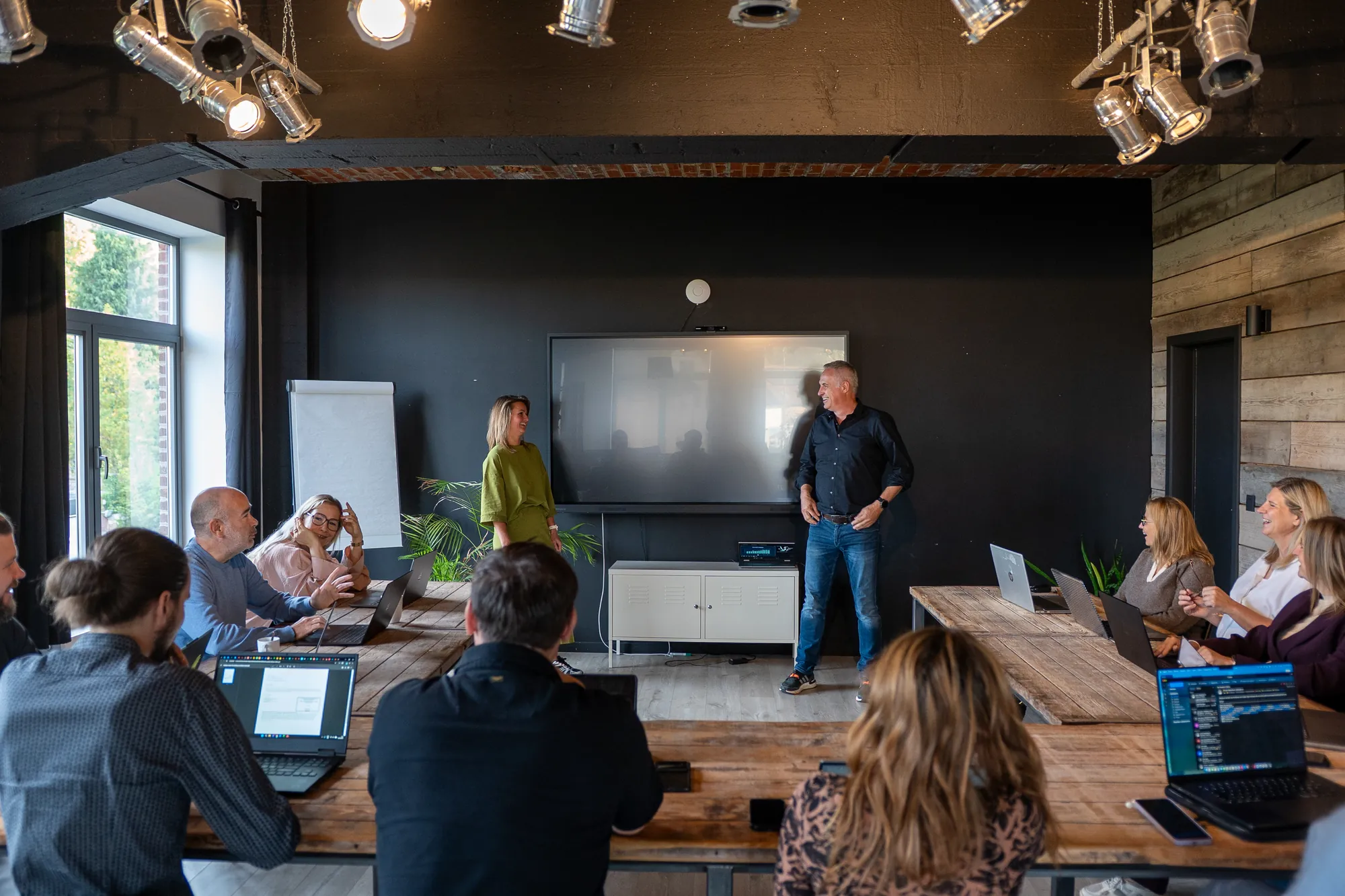
Two weeks later, everything is back to how it was. Sound familiar? A lot of sales training delivers less than expected, and that is rarely down to the participants. In this blog you’ll read why so many trainings deliver so little, what does work, how to train people who aren’t salespeople and what to look for when choosing a training.
In short: A one-day sales training rarely delivers lasting results, because behaviour doesn’t change in a day. What does work: a programme of a few months, with situations from your own work, lots of practice and coaching on the job. For people who aren’t salespeople (project managers, customer service, technicians), the focus is on spotting opportunities, working with the customer in mind, discussing extra work and handling difficult customers, without sales tricks.
Why so much sales training delivers so little
An external trainer comes in for a day. There’s plenty of laughter, there are role plays and everyone goes home with a folder full of tips. Two weeks later, everyone is working the way they did before. Sound familiar? It’s the fate of a lot of sales training, and it isn’t the participants’ fault. Behaviour doesn’t change in a day. It takes repetition, practice in real situations and someone looking over your shoulder.
A second problem: many trainings use generic textbook examples. A technician who spends a day practising how to sell a car doesn’t see the link with his own work. And a third: the training is disconnected from what happens in the company. There are no agreements on how opportunities are passed on, no follow-up by the manager and no way of measuring whether it pays off.
So what does work?
| What delivers little | What works |
|---|---|
| One training day | A programme of a few months, spread over time |
| Generic examples | Situations from the participants’ own work |
| Only theory and tips | Lots of practice, with feedback |
| Training disconnected from daily practice | Training combined with coaching on the job |
| The same approach for everyone | Taking the style of the participant and the customer into account |
| No follow-up | Agreements with managers and measurable goals |
Training and coaching together
The difference between a training that sticks and one that’s forgotten is usually coaching. A training teaches new skills in a group. Coaching helps people apply them in real situations. A coach sits in on customer meetings, looks at quotes, listens to a phone call and then gives targeted feedback. Step by step, what was learned in the training becomes a habit.
Coaching doesn’t always have to come from outside. Managers who learn to coach can keep supporting their team over time. Read more about leading as a coach in Leadership styles.
Sales training for people who aren’t salespeople
More and more companies train not only their salespeople but also the people with the most customer contact: project managers, customer service, technicians, the internal sales team. They don’t need to close deals. They do need to spot opportunities, work with the customer in mind, discuss extra work, handle difficult customers and pass opportunities on to the salesperson. Read more in Commercial thinking for non-salespeople.
For this group, a classic sales training often doesn’t work. They switch off at anything that smells of “sales tricks”. What does work: starting from their own work, explaining selling as helping the customer better, and practising with situations they recognise. A technician who practises telling a customer that a part will need replacing soon sees the point straight away.
Typical topics
| For salespeople | For non-salespeople |
|---|---|
| Prospecting and first contact | Recognising opportunities with existing customers |
| Uncovering needs (consultative selling) | Listening and asking follow-up questions with customers |
| Presenting a proposal | Upselling and cross-selling without being pushy |
| Handling objections | Difficult customers and complaints |
| Negotiating and closing | Discussing extra work and saying no |
| Following up on quotes | Passing opportunities on to the right person |
Read more about the topics for non-salespeople in Upselling, Difficult customers and complaints and Negotiating for non-salespeople.
What a programme looks like
A sales programme that sticks usually runs in four phases. First, look at how selling happens today: shadow salespeople or project managers, look at quotes, talk to a few customers. Where do you win, where do you lose, and why? Next come training sessions of half a day or a full day, spread over a few weeks, with exercises from your own practice. Between sessions, participants apply what they learned and discuss what worked in the next session. Finally, there’s coaching on the job: a coach sits in on real conversations and gives feedback.
The manager makes the difference here. If they don’t ask how things are going after the training and don’t make room to practise, the effect fades quickly. So involve managers from the start: what do they want to see change, and how will they follow it up? Also agree on how you’ll measure the result, for example more opportunities passed on, less free extra work or a higher quote conversion rate.
Taking style into account
Not everyone sells the same way, and not every customer buys the same way. A salesperson with a lot of Fiery Red goes quickly for the close, but loses customers who need time. A salesperson with a lot of Earth Green builds strong relationships, but doesn’t always ask for the signature. A good training takes that into account. That’s why we often start with a personal profile. Read more in Insights Discovery in sales.
An example
A technical company notices that its customer service team gets lots of questions that are really opportunities: customers considering an expansion, wanting a maintenance contract or opening a second site. Nobody passes them on. A classic sales training would achieve little here, because the employees don’t want to become salespeople. Instead, in three short sessions they discuss their own conversations from the past few months, practise how to name an opportunity and agree how to pass it on to the account manager. After three months, opportunities are passed on every month, and some of them turn into orders.
What to look for when choosing a training
- Does the trainer start from your daily practice? Ask whether there are conversations with participants and managers beforehand.
- Is there coaching on the job? Or does it stay with sessions in a meeting room?
- Is it a programme or a single day? Spread over time works better.
- Is there attention for non-salespeople? If they take part too, the approach needs to be different.
- How is the result measured? What should be different after a few months?
How JDI approaches it
JDI provides sales training for salespeople and for people who aren’t salespeople. We start by looking at how selling happens today: we shadow your people, look at quotes and talk to a few customers. Then we train with situations from your own practice, in consultative selling, negotiating, handling objections, spotting opportunities and working with the customer in mind. And we combine the training with coaching on the job: we sit in on conversations and give feedback until the new rhythm comes naturally. How to get your whole team thinking commercially is explained in Commercial thinking for non-salespeople. Read more about our approach to sales training and sales management.
Frequently asked questions
What do you learn in a sales training?
That depends on the team. Common topics are running a customer conversation, asking questions and listening, uncovering needs, presenting a proposal, handling objections, negotiating and following up on quotes. For people who aren’t salespeople, the focus is more on recognising opportunities, working with the customer in mind, discussing extra work and difficult customers.
How long does a sales training take?
A one-day training gives energy, but after two weeks the old habits are often back. A programme of a few months is more effective: a handful of training sessions spread over time, with practice on the job in between and coaching in the workplace. That gives new behaviour the time to become a habit.
What’s the difference between sales training and sales coaching?
A training teaches a group new skills, usually in a session with theory and exercises. Coaching is individual, on the job, and helps people apply those skills in real conversations. A coach might sit in on customer meetings and give feedback afterwards. They work best together.
Is sales training also useful for people who aren’t salespeople?
Yes, as long as it’s adapted. Project managers, customer service and technicians often have the most customer contact. They don’t need to close deals, but they do need to spot opportunities, work with the customer in mind, discuss extra work and deal with difficult customers. A training that starts from their own work, without “sales tricks”, usually goes down well.
How do you measure whether a sales training works?
Agree beforehand what you want to see change: more opportunities passed on, less free extra work, higher customer satisfaction, more quotes converted. Measure it before the training and a few months after. Also ask participants and their managers what is concretely different in their conversations.
Make your team commercially stronger.
Do you want your project managers, customer service or technical people to become commercially stronger, without having to become salespeople? Tell us briefly about your team and your customers, and we’ll propose a tailored training, with exercises from your own practice and coaching on the job. Email hallo@jdi.be or call 016 88 37 55. Get more out of your team
More insights

What does a DISC test measure, what doesn’t it, and what do you gain with your team? Five steps, a comparison with Insights and MBTI and a short exercise.

What is peer supervision, how does it differ from supervision and coaching, and how do you run a session? Six steps, an example and eight good questions.

A summary of Vlerick’s Six Batteries of Change: the six batteries, how to scan them with your management team and how it differs from Kotter and ADKAR.
Want to take this on in your business?
You don’t have to have your question sorted yet. Working that out is exactly where we start.