
Team dynamics: why one team runs smoothly and another gets stuck
Two teams in the same company, with the same resources and a similar brief.
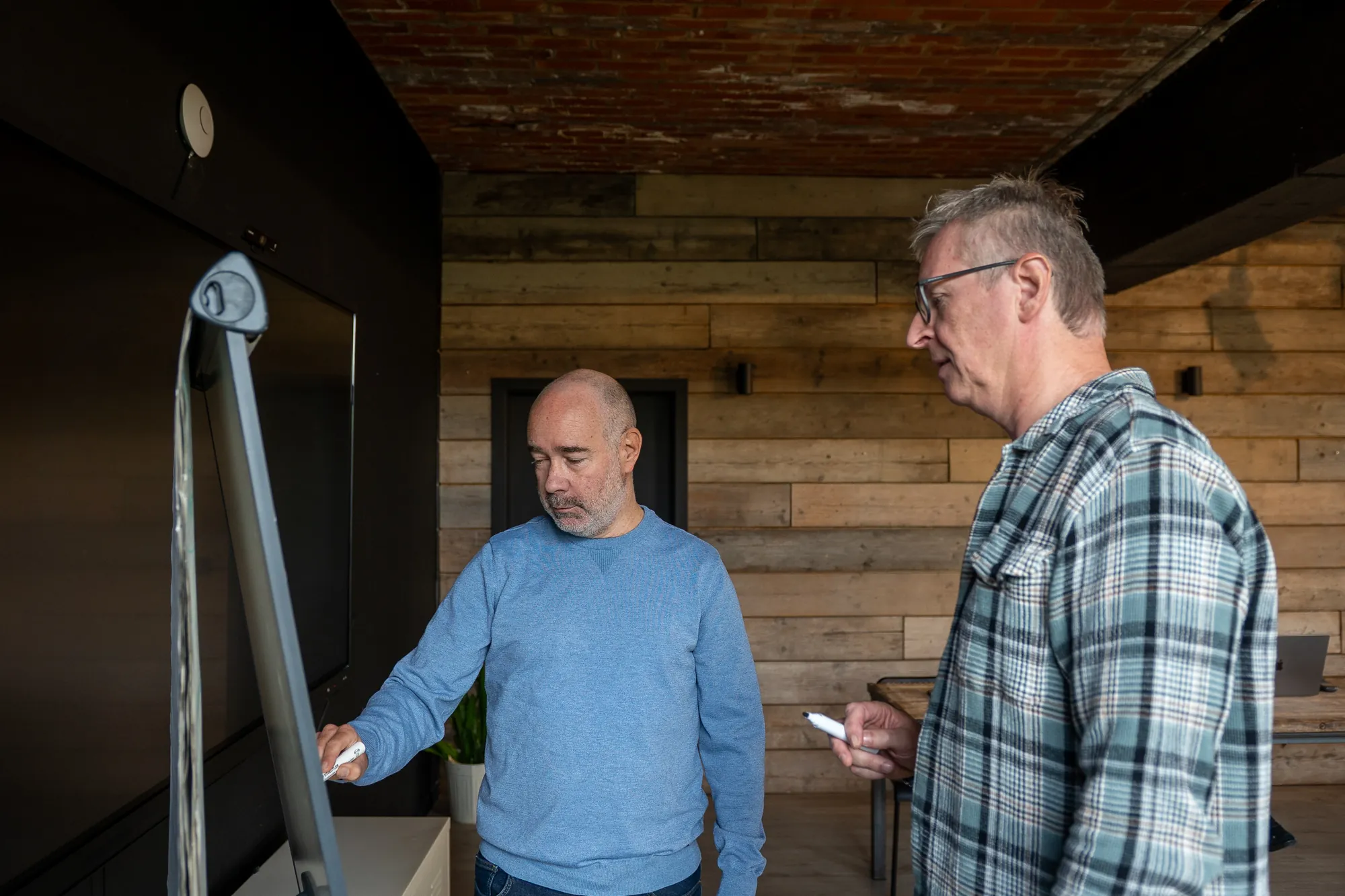
One team hits its goals and has a good atmosphere. The other gets bogged down in arguments, misses deadlines and loses people. The difference rarely lies in the individuals. It lies in the team dynamics: the way people in a team respond to each other. In this blog you’ll read what team dynamics are, which six building blocks make the difference and how to get started.
In short: Team dynamics are the way people in a team respond to each other and work together. Six building blocks make the difference: trust and psychological safety, open discussion, a shared goal, clear roles and an understanding of differences in style, feedback and accountability, and the stage the team is in. When a team gets stuck, one of those building blocks is usually missing. Start by making visible what’s going on, for example with a team scan.
What are team dynamics?
Team dynamics are the way people in a team respond to each other. They’re about what you can’t see in an organisation chart: who speaks up, who stays quiet, how decisions are really made, what happens when things get tense and who feels heard. Every group of people that works together has its dynamics. The question is whether they help the team or hold it back.
The term comes from group dynamics, a field started in the 1940s by the psychologist Kurt Lewin. He showed that how people behave in a group depends as much on the group itself as on their personality. The same person can blossom in one team and close up in another.
Why one team runs smoothly and another gets stuck
When a team gets stuck, the explanation rarely lies with one person. Usually it’s a combination of factors that reinforce each other. Research and our own experience with teams keep pointing to six building blocks. If one of them is missing, you notice it in how the team works together.
| Building block | When it’s right | When it’s missing | Read more |
|---|---|---|---|
| Trust and safety | People dare to admit mistakes and ask questions | Silence, hidden mistakes, bad news arrives late | B1 Lencioni, B4 Psychological safety |
| Open discussion | Ideas are debated vigorously, without personal attacks | Artificial harmony or escalating conflict | B8 Conflict in a team |
| Clear goals | Everyone knows where the team is heading | Everyone pulls in a different direction | B10 Core values |
| Roles and differences | Everyone knows what they contribute, differences are put to good use | Tasks fall through the cracks, irritation about styles | B3 Belbin, A1 Insights colours |
| Feedback and agreements | Colleagues hold each other to account, agreements are kept | The manager has to follow up on everything | B5 Giving feedback |
| Stage of the team | The team knows where it stands and what it needs | Frustration because expectations don’t match the stage | B2 Tuckman |
1. Trust and psychological safety
It all starts with trust. In a team where people are afraid to admit a mistake or ask a stupid question, a lot of energy goes into self-protection. Problems surface too late, good ideas don’t get shared. That’s why Patrick Lencioni puts trust at the bottom of his pyramid, and Amy Edmondson showed that psychological safety is the strongest predictor of a learning team. Read more in The Lencioni pyramid and Psychological safety in your team.
2. Open discussion and healthy conflict
A team with good dynamics can have a heated debate and then have lunch together. Healthy conflict is about ideas, not people. Teams that avoid every conflict make worse decisions, because not all the arguments get put on the table. Teams in which conflict gets personal lose energy to rows. The trick is to stay in the middle. How to do that, you can read in Conflict in a team.
3. A clear and shared goal
A team without a clear goal is a group of people who happen to work together. Everyone works hard, but in a different direction. A shared goal gives direction to decisions and helps set priorities. It works best when the team helped define it, and when it’s linked to values everyone stands behind. How to do that together, you can read in Defining core values with your team.
4. Roles and differences in style
In a good team, everyone knows what they contribute. That’s about tasks, but also about roles: who comes up with ideas, who guards quality, who looks after the atmosphere? Belbin describes nine team roles that together form a strong team. On top of that, people differ in style: one communicates quickly and directly, another takes their time. Insights Discovery makes those differences visible with four colours. If you understand them, you get less irritated and make more use of them. Read more in Belbin team roles and The Insights colours explained.
5. Feedback and accountability
In teams with good dynamics, colleagues hold each other to agreements. The manager doesn’t always have to do it. That calls for a culture in which feedback is normal, small and regular, in both directions. Where that culture is missing, the manager becomes the team’s police officer, and that wears everyone out. Read more in Giving feedback in a team.
6. The stage the team is in
A team that has just started needs something different from a team that has worked together for years. Bruce Tuckman described five stages, from forming to adjourning. A lot of frustration in teams arises because expectations don’t match the stage. A new team that’s already expected to perform like an experienced one, or a team that’s back in storming after a reorganisation without anyone naming it. Read more in Tuckman’s stages of team development.
The role of the manager
A manager has a big influence on team dynamics, often bigger than they realise. How they react to bad news, whether they ask for feedback themselves, who they give the floor to in meetings: the team watches and adapts. A manager who knows their own style sees more clearly what their team needs. That’s why we often link team programmes to leadership development. How to lead each colour, you can read in Insights Discovery for managers.
How to get started
Working on team dynamics starts with making visible what’s going on. You can do that with an open conversation, but people don’t always say what they think in a group. A short, anonymous team scan often gives a more honest picture. Then discuss with the team which building block needs the most attention, and start there. Small steps work better than a big plan: one agreement about meetings, one habit around feedback.
Want to get going straight away? Read Improving collaboration in your team for seven things you can do tomorrow. And if you’re planning a team day, first read A team day that delivers more than a nice day out.
How JDI approaches it
JDI guides teams that want to work together better. We start with the team scan, which shows in five minutes where a team is losing productivity. Then we choose the approach together: an Insights Discovery workshop to understand differences in style, working sessions on trust, feedback and agreements, or coaching for the manager. We work for SMEs, family businesses and scale-ups, and for larger organisations such as Buildwise. Read more about our approach on the Team & organisation page.
Frequently asked questions
What are team dynamics?
Team dynamics are the way people in a team respond to each other and work together. They’re about the invisible forces in a team: who speaks up, how decisions are made, how you deal with tension, who feels heard. Good team dynamics mean a team achieves more than the sum of its individuals.
What are the characteristics of good team dynamics?
In a team with good dynamics, people dare to ask questions and admit mistakes, discuss ideas openly, back decisions, hold each other to agreements and share a clear goal. There’s room for different styles, and the atmosphere is good without everything being smoothed over.
What are the signs of poor team dynamics?
Quiet meetings with discussions afterwards, decisions that don’t get carried out, cliques working against each other, a manager who has to follow up on everything, high turnover and lots of sick leave. You also often see the same problems coming back without ever being solved.
How do you improve team dynamics?
Start by making visible what’s going on, for example with a team scan or an open conversation. Then work on the foundation: trust and psychological safety. Make clear agreements about goals, roles and how you work together. Use a shared language, such as the Insights colours, to make differences open to discussion. And come back to it regularly.
Can a new team member change the team dynamics?
Yes, quite strongly. Every change in line-up takes a team back to an earlier stage of team development. A new team member can break through entrenched dynamics, but can also stir up tension. Good onboarding and a conversation about the team’s agreements help that go well.
Find out where your team gets stuck.
Want to know where your team gets stuck? Take the free team scan: in five minutes you’ll see where your team is losing productivity. Rather talk straight away? Email hallo@jdi.be or call 016 88 37 55. Take the team scan
More insights

What does a DISC test measure, what doesn’t it, and what do you gain with your team? Five steps, a comparison with Insights and MBTI and a short exercise.

What is peer supervision, how does it differ from supervision and coaching, and how do you run a session? Six steps, an example and eight good questions.

A summary of Vlerick’s Six Batteries of Change: the six batteries, how to scan them with your management team and how it differs from Kotter and ADKAR.
Want to take this on in your business?
You don’t have to have your question sorted yet. Working that out is exactly where we start.