
A team day that delivers more than a nice day out
Same story every year. There has to be a team day, someone looks for a fun activity, everyone has a lovely day and on Monday everything carries on as before.
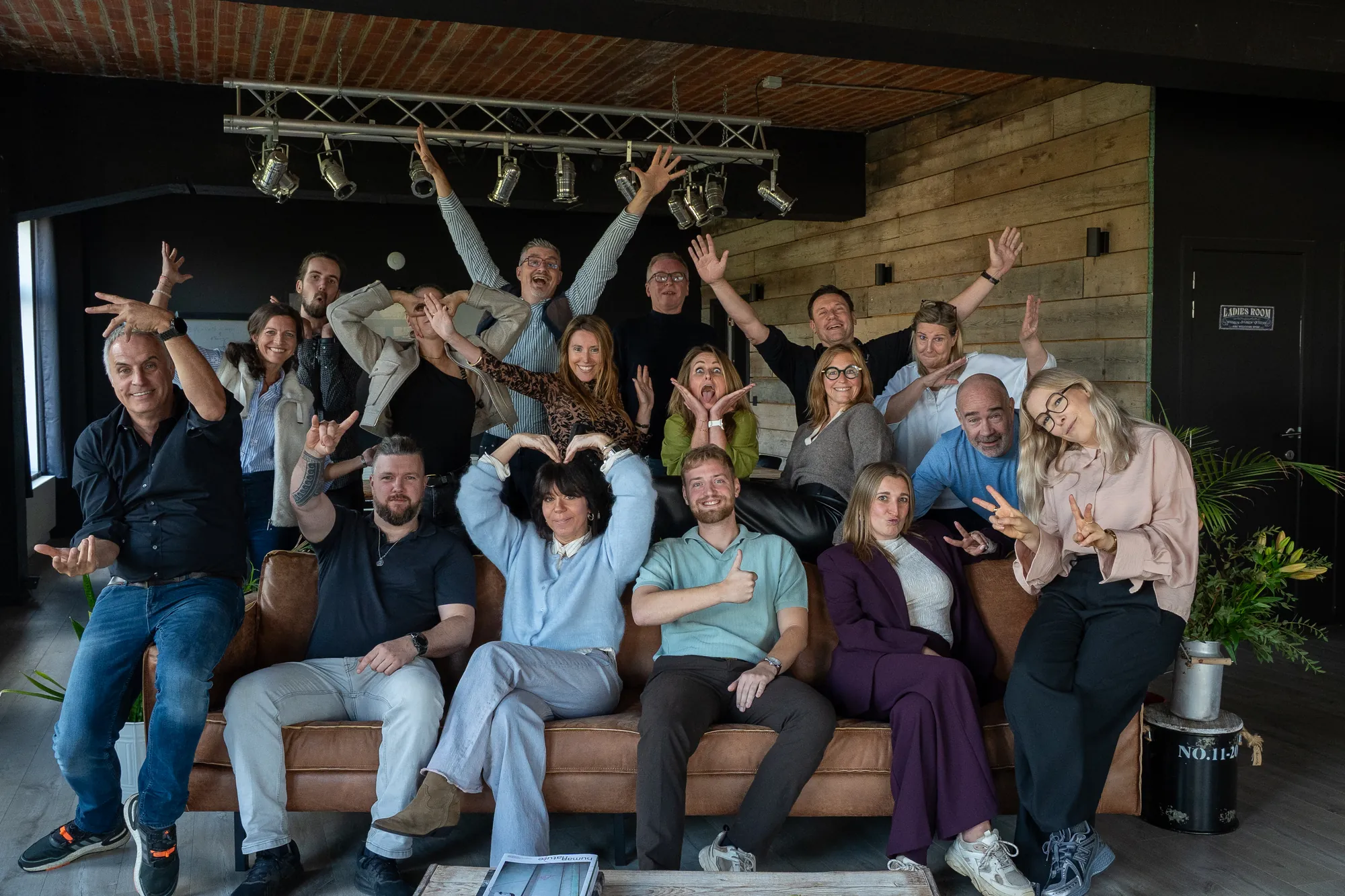
That’s a pity, because a team day is one of the few moments when the whole team is together. In this blog you’ll read how to organise a team day that really changes how your team works together, and is still a good day.
In short: A team day delivers more when you start with a clear goal: what should be different after this day? Combine content in the morning with downtime in the afternoon, choose one main goal and leave plenty of room for conversations. An external facilitator lets the manager take part fully. End with three to five concrete agreements and plan a follow-up after four to six weeks.
Why many team days deliver little
A team day costs money and time. A full day with ten people quickly adds up to two weeks of work. Yet many team days are organised without anyone knowing what they should deliver. A fun activity is chosen, a good venue, a nice meal. Everyone has a lovely day, and on Monday everything carries on as before.
That isn’t a wasted day: having fun with colleagues is valuable. But it is a missed opportunity. A team day is one of the few moments when the whole team is together, away from the daily rush. You can use that moment to really change something in how the team works together, and still have a good day.
Start with the goal
The most important question when planning a team day is: what should be different after this day? The answer determines everything: the programme, the length, the venue and whether you need an external facilitator. A few examples of goals we often come across:
| Goal | What you do | What it delivers |
|---|---|---|
| Understanding each other better | Workshop on communication styles, for example with Insights Discovery | Shared language, less irritation, agreements on communication |
| Improving collaboration | Discussing the team scan, working on roles and agreements | Clear roles, better meetings |
| Starting a new team | Getting to know each other, setting goals and ground rules | A team that gets up to speed faster |
| After a difficult period | Looking back, discussing tensions, reconnecting | Trust and energy to move on |
| Setting direction | Discussing strategy, priorities and values | A shared picture of where the team is heading |
Choose one main goal. A team day that tries to solve everything at once usually solves nothing. Discuss the goal with the team beforehand too, so everyone knows why they’re there.
A good programme: content and downtime
The best team days alternate content and downtime. A whole day of workshops is tiring; a whole day of activities without content delivers little. A programme that often works well looks like this.
- Morning: the content. People are fresh and focused. This is where you work on the main goal.
- Lunch: eating together, without phones. This is often where the best conversations happen.
- Early afternoon: an activity linked to the theme, or simply something relaxing.
- Late afternoon: feeding back and making agreements. What do we take away?
- Evening (optional): dinner or drinks, without an agenda.
Leave enough room. A programme packed minute by minute leaves no time for the conversations that really matter. An extra fifteen minutes per session is rarely time lost.
An Insights workshop as a team day
A workshop on Insights Discovery is one of the most popular ways to fill a team day, and that’s no coincidence. It combines content and fun. Everyone receives a personal profile in advance and, during the workshop, discovers their own colour and those of their colleagues. That brings a lot of recognition and laughter, and also deep conversations about how the team works together.
The result is a shared language the team keeps using after the day. “Let me make this a bit more blue for you” or “Can I be red for a moment?” become sentences that make working together easier. The team makes concrete agreements about meetings, emails and feedback, and knows better what each colleague needs. What the colours mean, you can read in The Insights colours explained.
Common mistakes
- Trying to do too much. Strategy, collaboration and team building in one day: nothing gets proper attention.
- No preparation. Participants walk in without knowing why they’re there.
- The manager doing all the talking. A day full of presentations by management is a meeting, not a team day.
- Avoiding difficult subjects. If everyone knows something is going on and it doesn’t come up, the day loses its credibility.
- No agreements. A good day without agreements is forgotten by Monday.
Why an external facilitator helps
Many companies organise their team day themselves, and that can work fine for a relaxing day. But when there’s real content to work on, an external facilitator helps for three reasons. First, the manager can then take part fully instead of moderating. Second, employees are more open with a neutral outsider than with their manager. And third, a facilitator brings methods and experience to help difficult conversations go well.
That’s especially important when there are tensions in the team. A team day where a conflict surfaces without anyone steering the conversation well can do more harm than good. How to deal with conflict, you can read in Conflict in a team.
After the team day: the follow-up
The biggest difference between a team day that delivers and one that gets forgotten is the follow-up. End the day with three to five concrete agreements, no more. Write them down and put them up where everyone can see them. Discuss them at the next team meeting. And plan a follow-up after four to six weeks: what has changed, what works, what doesn’t?
Without that follow-up, the effect quickly fades. People go back to their old habits, not out of unwillingness, but because the daily rush takes over. With follow-up, the agreements become habits, and that’s what it’s all about. If you want to build on it straight after the team day, Improving collaboration in your team gives you seven steps to get going.
A checklist for your team day
- Goal: what should be different after this day?
- Participants: who needs to be there, and is the manager a participant or the organiser?
- Preparation: do participants get something to do in advance, such as a profile or a team scan?
- Programme: content in the morning, downtime in the afternoon, enough breaks.
- Venue: away from the office, quiet, with a good space for group work.
- Facilitation: in-house or external?
- Agreements: how do we record what we decide?
- Follow-up: when do we look back?
How JDI approaches it
JDI facilitates team days that deliver more than a nice day out. We discuss the goal with the manager beforehand and propose a tailored programme. It often starts with the team scan to see where the team stands, with an Insights Discovery workshop at the heart of the day. We make sure there are concrete agreements at the end, and come back after a few weeks to see what has changed. We do this for teams of SMEs, family businesses and scale-ups, and for larger organisations such as Buildwise and Crelan Group.
Frequently asked questions
What is the difference between a team day and team building?
Team building is usually an activity that’s mainly about fun and getting to know each other: an escape room, a cooking workshop, a sports day. A team day can be that too, but ideally it has a content goal: working together better, discussing a strategy or making agreements. The best team days combine both.
How long should a team day last?
A full day works well for a combination of content and downtime. Half a day is enough if the goal is limited, for example a workshop on communication styles. Two days with an overnight stay make sense for management teams working on strategy. More important than the length is that the programme isn’t too packed.
What does a team day cost?
That depends a lot on the venue, number of participants, catering and facilitation. An external facilitator costs more than a day you organise yourself, but often delivers more because everyone, including the manager, can take part fully. Ask for a tailored proposal, so you know what you’re getting.
Should the manager lead the team day?
Preferably not, especially when sensitive subjects come up. A manager who moderates finds it hard to take part at the same time. Employees are also less open when their manager is steering the conversation. An external facilitator is neutral and makes sure everyone gets a say.
How do you make sure a team day has an effect?
Set a clear goal in advance, end the day with concrete agreements and plan a follow-up after a few weeks. Put the agreements up on the wall or add them to the team meeting. Without follow-up, the effect of a team day has usually faded within a few weeks.
Plan a team day that sticks.
Want a team day that delivers more than a nice day out? Tell us briefly about your team and what you want to achieve, and we’ll propose a tailored programme. Email hallo@jdi.be or call 016 88 37 55. Discover your team’s colours
More insights

What does a DISC test measure, what doesn’t it, and what do you gain with your team? Five steps, a comparison with Insights and MBTI and a short exercise.

What is peer supervision, how does it differ from supervision and coaching, and how do you run a session? Six steps, an example and eight good questions.

A summary of Vlerick’s Six Batteries of Change: the six batteries, how to scan them with your management team and how it differs from Kotter and ADKAR.
Want to take this on in your business?
You don’t have to have your question sorted yet. Working that out is exactly where we start.