
Insights Discovery, DISC or MBTI: which model fits your team?
You want to work on collaboration with your team, and someone suggests a personality test.
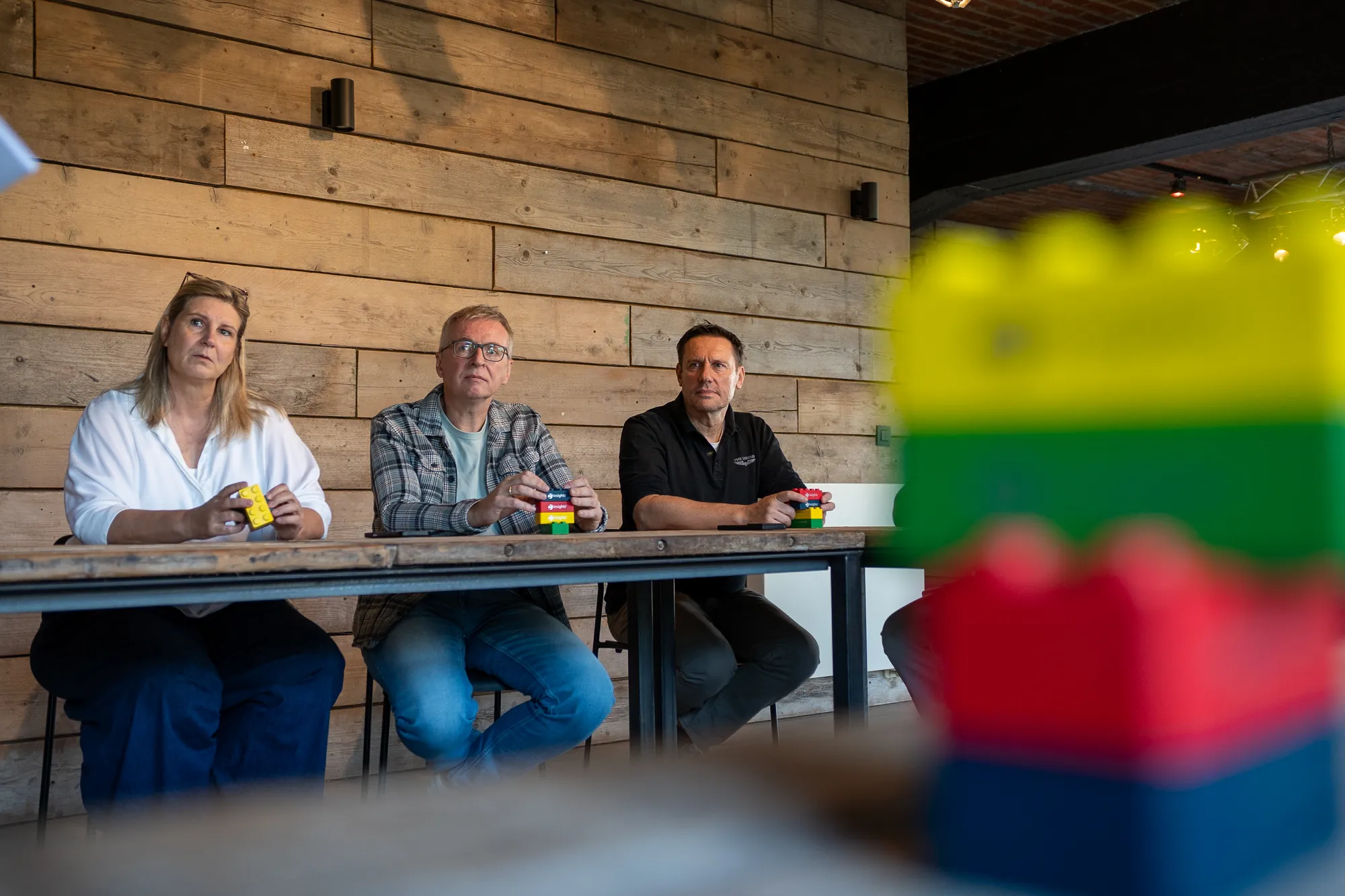
The only question is: which one? One colleague swears by DISC, another once got an MBTI type, and a third talks about red and blue colleagues. They look alike, but they’re not the same. In this blog we put the three best-known models side by side: where they come from, what they measure, what they’re good at and which model fits what you want to achieve with your team.
In short: DISC describes behaviour with four styles (dominance, influence, steadiness and conscientiousness) and is simple and immediately usable. MBTI divides people into sixteen types based on Jung and gives a lot of nuance about one person, which makes it strong for personal development. Insights Discovery also builds on Jung, but translates it into four colours and 72 positions, which makes it easy to develop a shared language in a team. For team workshops many organisations choose colours; for career guidance, MBTI is the more likely choice.
Three models, one goal
All three models want the same thing: to give people insight into their own behaviour and that of others, so they work together better. They don’t measure intelligence, talent or suitability for a job. They describe preferences: how you prefer to communicate, decide and work. The difference lies in their origin, in how detailed they are and in how easily you can use them in a team.
That’s why the question of which model is best matters less than you think. What matters more is which model fits what you want to do, and whether your team still uses it after the workshop. A model that’s forgotten after three weeks hasn’t delivered much, however well it’s put together.
DISC: four behavioural styles, immediately usable
DISC goes back to the work of the American psychologist William Moulton Marston in the 1920s. He described four dimensions of behaviour: Dominance, Influence, Steadiness and Conscientiousness. Someone with a lot of D is direct and results-driven, a lot of I is enthusiastic and sociable, a lot of S is patient and loyal, and a lot of C is precise and analytical. Sound familiar? That’s right, the four Insights colours roughly correspond to them.
DISC is simple, quick to understand and available in many variants, from short online tests to extensive reports. That’s also its drawback: there are so many versions that “a DISC profile” can mean something different at one agency than at another. DISC mainly looks at visible behaviour, less at what lies beneath it.
MBTI: sixteen types for those who want to go deeper
The Myers-Briggs Type Indicator, MBTI for short, was developed by Katharine Cook Briggs and her daughter Isabel Briggs Myers, based on Carl Jung’s typology. MBTI looks at four pairs of opposites: where you get your energy (extraverted or introverted), how you take in information (sensing or intuitive), how you decide (thinking or feeling) and how you organise your life (judging or perceiving). That produces sixteen types, each with a four-letter code, such as ENTJ or ISFP.
MBTI gives a lot of nuance about one person, and is therefore strong for coaching and career guidance. In a team it’s harder: nobody remembers sixteen types and four letters after one workshop. A common criticism is also that the split into opposites is strict, while many people sit somewhere in the middle. Note: the popular free test from 16Personalities is not the official MBTI instrument.
Insights Discovery: four colours, 72 nuances
Like MBTI, Insights Discovery builds on Jung, but translates it into four colour energies: Fiery Red, Sunshine Yellow, Earth Green and Cool Blue. Everyone has all four, in their own mix. Within that, the model distinguishes eight main types and 72 positions on a wheel, so your profile still has plenty of nuance. What each colour means is explained in The Insights colours explained.
The strength of Insights Discovery lies in its simplicity on the surface and its depth underneath. You remember colours straight away, and after a workshop you hear colleagues say: “I’ll take a bluer approach to this.” That’s exactly what you want: a language that sticks. The personal profile is extensive and also shows how much you adapt to your work environment. How the questionnaire works is explained in The Insights Discovery test.
The three models side by side
| DISC | MBTI | Insights Discovery | |
|---|---|---|---|
| Origin | William Moulton Marston, 1920s | Briggs and Myers, based on Jung | Insights, based on Jung |
| Result | Four behavioural styles (D, I, S, C) | Sixteen types (four letters) | Four colours, eight types, 72 positions |
| Looks at | Mainly visible behaviour | Preferences in perceiving and deciding | Preferences and how you adapt to your environment |
| Strong in | Simplicity, quick to apply | Depth for one person, careers | Shared language in a team, easy to remember |
| Less strong in | Many different versions | Hard to remember in a team | Official profile is provided through a partner |
| Ideal for | Sales and customer contact, quick team session | Coaching and career guidance | Team workshops, leadership, collaboration |
Which model fits your situation?
Start with what you want to achieve. If you recognise your situation below, you know which direction to look in:
- You want a team to work together better and clash less: Insights Discovery. Colours quickly become a shared language.
- You’re guiding one person with a career question: MBTI gives a lot of nuance about someone’s preferences.
- You want a short, accessible session for a sales team: DISC is quick to explain and immediately usable.
- Your organisation has used one model for years: stick with it. A shared language is worth more than the perfect model.
- You want insight into roles within a team: then Belbin is interesting, a different kind of model that looks at team roles rather than personality. More on that in Belbin team roles.
Why JDI works with Insights Discovery
We work with teams at SMEs, family businesses and scale-ups. There, we mainly want one thing: that people treat each other differently after the workshop, not just that they have an interesting report. Insights Discovery helps with that for three reasons. Everyone remembers the colours, from the managing director to the new colleague. The model stresses that every colour has value, so nobody feels pushed into a bad box. And the profile also shows how much energy it costs someone to adapt, which often explains why someone gets stuck.
That doesn’t mean the other models are bad. If you’ve had good experiences with DISC for years, we wouldn’t advise you to turn everything upside down. What we do see: what the team does with it after the workshop matters more than the model itself. That’s why we link every profile to a conversation and every workshop to concrete agreements, with follow-up after a few weeks. At Crelan Group that brought together an audit team from two banks, with more trust thanks to a shared language. Read more about our approach on the Insights Discovery page.
Frequently asked questions
Is Insights Discovery the same as DISC?
No, although they’re similar. Both work with four behavioural styles, and the Insights colours roughly correspond to the DISC letters: red with D, yellow with I, green with S and blue with C. But the models have a different origin. DISC comes from the work of William Moulton Marston, while Insights Discovery builds on Carl Jung and therefore also looks at how you process information and decide.
Which is better, MBTI or Insights Discovery?
That depends on what you want to do. MBTI is strong for personal development and career guidance: sixteen types give a lot of nuance about how one person ticks. Insights Discovery is easier to remember and use in a team, because four colours become a shared language faster than four letters. That’s why most organisations choose colours for a team workshop.
Is the free 16Personalities test the same as MBTI?
No. The popular free test on 16personalities.com uses letters that resemble MBTI, but it’s a separate model from a different company. The official MBTI instrument is provided through certified practitioners. Fun to try, but if you compare results with colleagues, you may be comparing two different tests.
Can you combine different models?
Yes, but don’t do it in the same team at the same time. If you go through DISC, MBTI and Insights in one year, you usually remember none of them. Choose one model as the shared language for the team. If your organisation has had a model for years, that’s often the best choice, even if another model fits better on paper.
Can you use a personality test when hiring?
Be careful with it. Models like Insights Discovery and MBTI are designed for development and collaboration, not for deciding who gets a job. They describe preferences, not skills. That’s why JDI doesn’t use them for selection, but does use them to help a new team work together faster.
Discover your team’s colours.
Not sure which model fits your team? Tell us what you want to achieve, and we’ll tell you honestly whether Insights Discovery is the best choice or not. Email hallo@jdi.be or call 016 88 37 55. Discover your team’s colours
More insights

What does a DISC test measure, what doesn’t it, and what do you gain with your team? Five steps, a comparison with Insights and MBTI and a short exercise.

What is peer supervision, how does it differ from supervision and coaching, and how do you run a session? Six steps, an example and eight good questions.

A summary of Vlerick’s Six Batteries of Change: the six batteries, how to scan them with your management team and how it differs from Kotter and ADKAR.
Want to take this on in your business?
You don’t have to have your question sorted yet. Working that out is exactly where we start.